
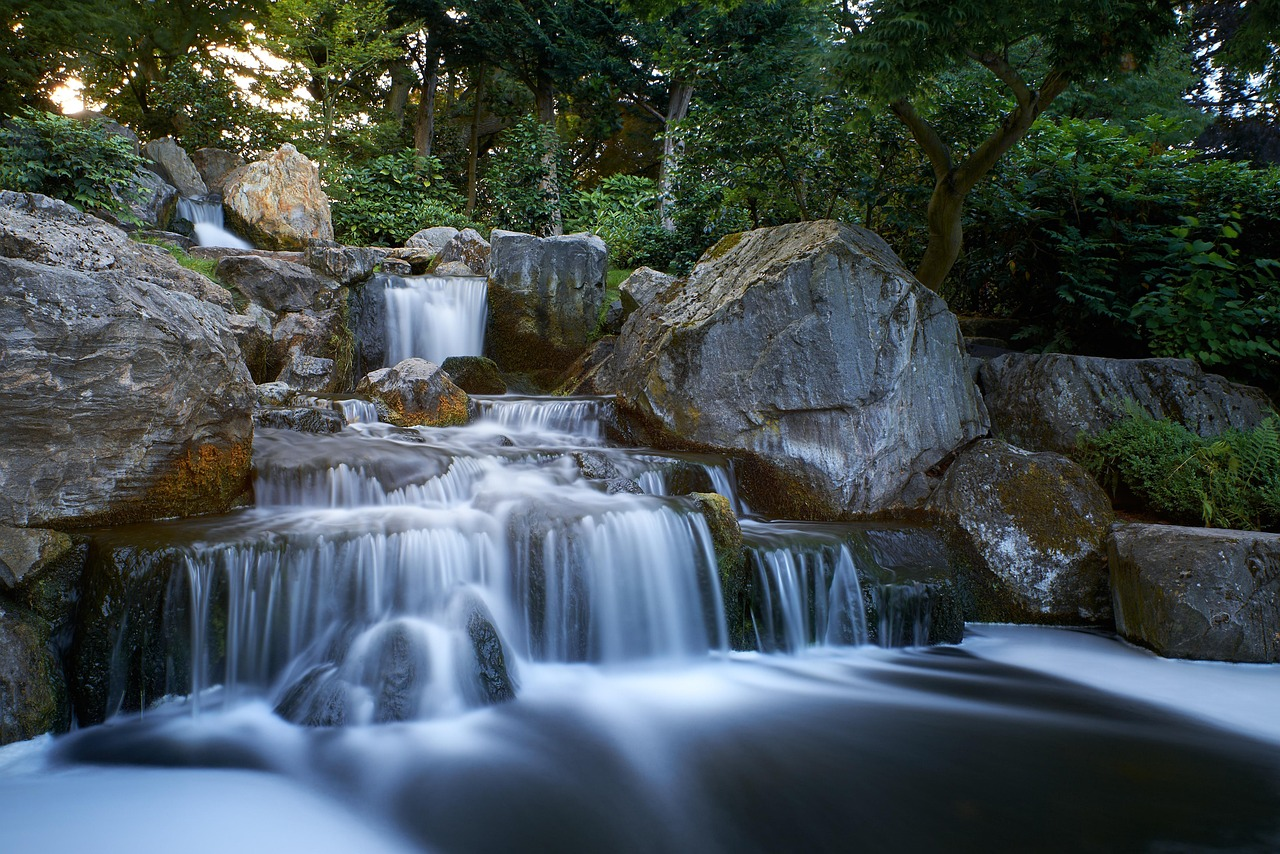
The first garden ever to exist was made by God Himself. It was a pleasant place made for Adam to dwell in:
The Lord God planted a garden eastward in Eden, and there He put the man whom He had formed.” (Gen. 2:8)
It was a resting place, fruitful and beautiful, where the divine provision abounded. As God attests, it was not the garden of man but the garden of God: “You were in Eden, the garden of God” (Ezekiel 28:13). God was the author of it, and it was a masterpiece on all sides. Yet Adam had the responsibility to take care of it and watch over it:
Then the Lord God took the man and put him in the garden of Eden to tend and keep it.” (Gen. 2:15)
This verse implies that a garden must be cared for. Left by itself, it can only deteriorate and return to the wild.
A place of meeting
It is also interesting to consider that the original place where man had fellowship with God was not in a building made by man, but in a garden made by God. And it was not a place where Adam went twice a week or once a day, it was where he lived, ate, worked. and slept, and more than it all, a place where he had fellowship with God. The same is true today. You can go into a building—wrongly called a church—but if you don’t have a garden where to meet with God, there will be no place of fellowship.
God’s garden described
If man can make beautiful gardens, what about God? His was a place of absolute beauty. It was, at its core, a manifestation of orderliness and breathtaking arrangements, a place where God loved to walk in the cool of the day and sing His song. The Scriptures put it this way:
And they heard the sound of the Lord God walking in the garden in the cool of the day, and Adam and his wife hid themselves from the presence of the Lord God among the trees of the garden. 9 Then the Lord God called to Adam and said to him, “Where are you?”” (Gen. 3:8,9)
Here we are told that Adam and Eve heard the sound of the Lord. Which kind of sound was it? Adam gives us the answer: “I heard Your voice in the garden, and I was afraid because I was naked; and I hid myself.” (Gen. 3:10) So the sound was God’s voice. It must be noticed here that Adam went into hiding only after he heard the voice. And only after Adam had gone in hiding did God ask, “Where are you?” Therefore, the voice of God was heard before the question, “Where are you?” Was God talking with himself, or was He singing? I leave the answer to your discretion.
Yes! The Garden of Eden was a place where fragrance and delight kissed each other. A place watered by the river of God where harmony, both aesthetical and ethical, subsisted with peace and tranquility.
Do I have such a garden?
All this whispers a question: What about me? Do I have such a garden? A place of absolute beauty and purity where I can have fellowship with my Beloved? Do I meet with Him there where the sound of joy is heard and thanksgivings dance graciously with praises, and this, right at the break of day? A place where the fruits of righteousness ripen under the protection of the Son? Do I have such a garden? Or do I have a land left to the wild? A land covered by bushes of frustration and shrubs of complaint, dry and dark, thorny and gloomy, where joy and singing have ceased.
I went by the field of the lazy man, and by the vineyard of the man devoid of understanding; 31 And there it was, all overgrown with thorns; its surface was covered with nettles; its stone wall was broken down. 32 When I saw it, I considered it well; I looked on it and received instruction: 33 A little sleep, a little slumber, a little folding of the hands to rest; 34 so shall your poverty come like a prowler, and your need like an armed man.” (Prov. 24:30–34)
Do we want the garden of God in our heart?
This is the real question. If we answer affirmatively, then the garden Maker will ask our land. “My son, give me your heart…” (Prov. 23:26) The moment we offer it to Him without reservation His work begins, for God does not dwell amidst thorns and shrubs. He dwells in the gardens:
“You who dwell in the gardens, the companions listen for your voice—let me hear it!” (Song of Solomon 8:13)
The plow
The first thing God does when we give Him our heart is to plow it with mercy and truth, for He is not going to plant His precious seeds among thorns (Jer. 4:3). The plow must first cut, expose the old, and make way for the new. If we resist it, we simply demonstrate that we have not really given our heart to the Garden Maker.
The second thing we must do is to tend and keep what God produces. This must be done, not in the sweat of our face but in the rest of His grace, for to be coworkers with God (1 Cor. 3:9) is not burdensome but delightsome:
Take My yoke upon you and learn from Me, for I am gentle and lowly in heart, and you will find rest for your souls.” (Matt. 11:29)
And at last, the garden of God doesn’t grow in fretfulness but in faithfulness, and it is where the voice and the song of God can be heard. The Jewish populace, in Jesus’ days, didn’t have such a garden. No wonder Jesus told them: “And the Father Himself, who sent Me, has testified of Me. You have neither heard His voice at any time, nor seen His form” (John 5:37). This is the fate of the person dwelling in the midst of shrubs & thorns, where the lukewarm waters of mediocrity kill all inspirations and deafen the ears.
If you think this post can help somebody, you can share it with the options presented below.